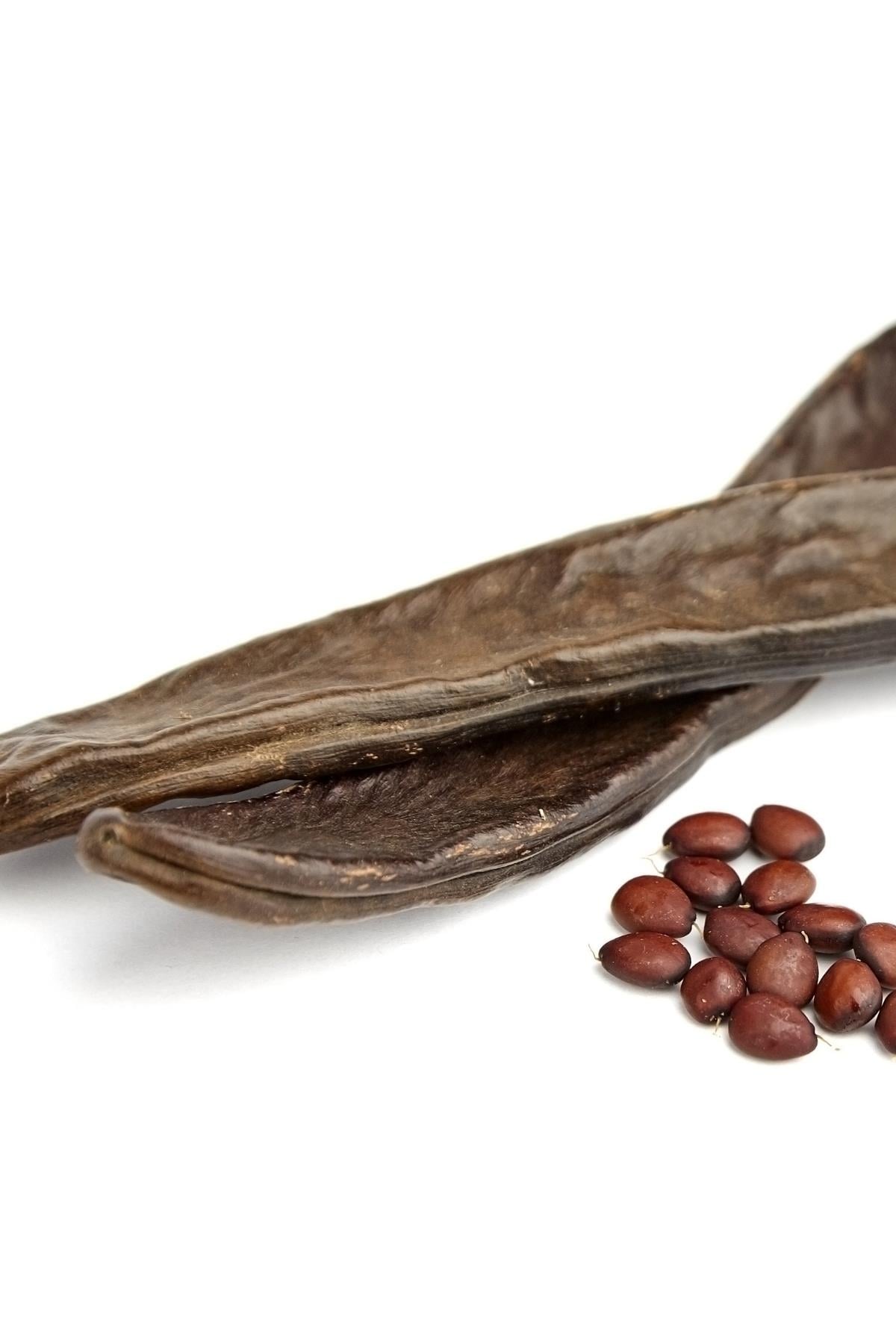
Carob Pesticide-Free
Couldn't load pickup availability
Kargo çıkışı pazartesi–perşembe · Cuma, cumartesi ve pazar kargo yok
- Analiz raporu
- Güvenli ödeme
- 7 gün iade
Ürün hakkında
Carob, grown in the fertile soils of Antalya with a pesticide-free production approach, reaches your table from the branch while preserving its naturalness. Obtained in accordance with the principles of completely natural, local production and chemical-free agriculture, this product reflects Antalya Doğal Çiftlik’s philosophy of sustainable production.
Nutritional Value and Benefits of Carob
Carob is a nutritious food with its high fiber content, natural sugar structure, and vitamin and mineral profile. The table below shows the average nutritional values of 100 grams of carob:
Nutritional Values (100 g)
| Nutrient | Amount (100 g) |
|---|---|
| Calories | 222 kcal |
| Carbohydrate | 88 g |
| Fiber | 40 g |
| Protein | 4.6 g |
| Fat | 0.7 g |
| Calcium | 350 mg |
| Potassium | 800 mg |
| Iron | 2.9 mg |
| Magnesium | 54 mg |
| Vitamins A, B, and E | Contains |
Benefits of Carob
The benefits of carob are endless. Some of these include:
- Aids digestion due to its high fiber content.
- Supports immunity thanks to its antioxidant structure.
- Rich in calcium, helping to maintain bone health.
- A natural energy source.
- Supports bowel movements when consumed regularly.
What is Carob Good For?
With its high fiber content, carob contributes to balancing the gut flora and supports the digestive system. Thanks to its antioxidant properties, it fights free radicals in the body and helps strengthen the immune barrier. Being rich in natural calcium and minerals, it supports bone and tooth development.
What are Desserts / Dishes Made with Carob?
Carob can be used both on its own and in various recipes. You can see practical recipe suggestions in the table below:
| Recipe | Usage Method | Additional Combination Suggestion |
|---|---|---|
| Carob Flour Cake | A portion of the flour is replaced with carob flour | Banana and walnuts can be added. |
| Yogurt with Carob Molasses | Molasses is added over yogurt | Can be made with pomegranate seeds and almonds . |
| Carob Energy Balls | Dates + carob flour are mixed | Hazelnuts or cashews can be added |
| Smoothie | Carob powder is used in the blender mixture | Banana, oats, and milk can be added. |
Buy Carob Online
You can easily order pesticide-free, natural, and local carob with the assurance of Antalya Doğal Çiftlik. Order now and have the freshest carob delivered to your door.
- Carob harvested every morning is packaged on the same day.
- Shipped while maintaining the freshness chain.
- Special packaging is used to prevent crushing during transit.
- Secure shopping opportunity with a 7-day return guarantee.
Carob Storage Conditions
It should be stored in a cool, dark, and moisture-free environment. Using a cloth bag or glass jar helps maintain the product's freshness. It can be stored in the refrigerator for a long time; however, a sealed container should be preferred to prevent it from getting air.
Carob Shelf Life
When stored under appropriate conditions, carob maintains its freshness for 6-12 months. Room temperature and a dry environment extend its shelf life.
Where to Buy Carob?
Certified natural, pesticide-free carob can be safely purchased through the official website of Antalya Doğal Çiftlik. Being a local product, it is both a fresh and sustainable choice.
How to Consume Carob?
It can be consumed raw as a snack, or added to dishes in the form of molasses, powder, or flour. It can be mixed with yogurt or milk for breakfast and can act as a natural sweetener in smoothies.
Carob Production Process / From Farm to Table
Antalya Doğal Çiftlik produces carob by adhering to sustainable and pesticide-free agricultural principles. Thanks to these methods, carob contains no chemical residues and fully retains its nutritional value:
- Natural fertilization
- Biological pest control (release of beneficial insects)
- Soil analysis
- Controlled drip irrigation
- Hand harvesting
- Maintaining freshness via cold chain
Frequently Asked Questions (FAQ) about Carob
How Many Carobs Should Be Eaten Daily?
The ideal daily consumption amount is recommended as 1–2 pieces of carob or an equivalent portion (1 tablespoon in powder/molasses form). Since it is high in fiber and natural sugar, excessive consumption may strain digestion. Regular and measured use helps to obtain its benefits in a more balanced way.
Is Carob Eaten Raw?
Carob is a fruit that can easily be consumed raw. Due to its hard structure, the chewing time may be long when eaten raw, but it is preferred as a snack thanks to its natural sweetness. For those who want to use it in molasses, powder, or flour form, raw consumption is a good alternative.
How to Recognize Good Carob?
Good carob has a dark brown, shiny, and smooth-looking surface. When broken, the inside is dense and fibrous, and it should not be overly moist or too dry. Products with a pleasant smell and dominant sweet aroma are generally of high quality.
Should You Drink Water After Eating Carob?
Yes, there is no harm in drinking water after consuming carob; in fact, due to its dense fiber structure, water consumption can support digestion. Water helps fiber swell in the stomach and move more easily, facilitating digestion. Therefore, drinking water along with measured consumption is beneficial.
Does Carob Make You Gain Weight?
Since carob is rich in natural sugar and carbohydrates, excessive consumption may contribute to weight gain. However, when consumed in moderation, its fibrous structure provides a long-lasting feeling of satiety and can be supportive in a controlled diet.
Are Carob Seeds Edible?
Since carob seeds are quite hard, they are not eaten by directly chewing them. They are generally processed by grinding them into flour or powder form. It is possible to use them in recipes after they are properly processed.
REFERENCES:
Aksoy, M., & İnce, İ. (2016). Effects of carob (Ceratonia siliqua L.) and its products on nutritional value. Gıda Dergisi, 41(2), 107-113.
Özcan, M. M. (2007). Chemical composition of carob pods and products. Food Chemistry, 102(4), 123-129.
Yılmaz, H., & Gökmen, V. (2019). Phenolic compounds and antioxidant activity of carob and carob-based products. Journal of Food Science, 84(6), 1436-1443.
FAO. (2020). Carob production and nutritional profile overview. Food and Agriculture Organization Report.
Turkish Ministry of Agriculture and Forestry. (2022). Guide to carob cultivation. Agricultural Publications Series.