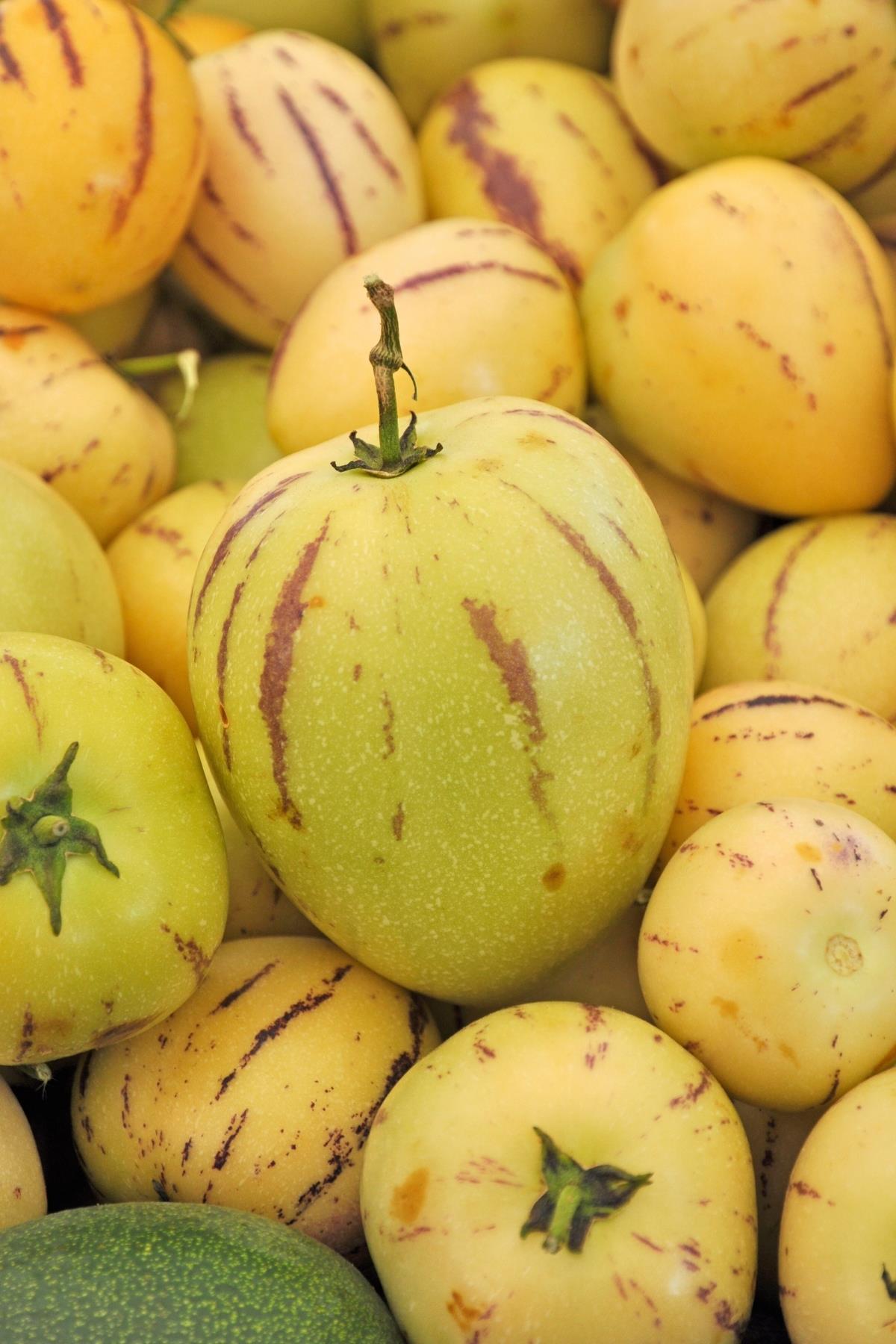
At Antalya Doğal Çiftlik, pepinos are grown using pesticide-free (chemical-free) farming principles, without harming nature or the soil. At every stage of the production process, 100% natural, local production, non-GMO, and traceable farming practices are adopted. This tropical fruit, which contains no chemical residues, is harvested through a controlled process from farm to table and delivered to consumers while preserving its freshness. Thanks to a certified production approach, pepino offers a reliable alternative that supports conscious consumption.
Pepino Nutritional Value and Benefits
Pepino stands out as a light fruit with its low-calorie structure and high water content. The average nutritional values per 100 grams are as follows:
| Nutrient |
Amount (100 g) |
| Energy |
25–30 kcal |
| Carbohydrate |
6 g |
| Protein |
0.5 g |
| Fat |
0.1 g |
| Fiber |
1 g |
| Vitamin C |
25 mg |
| Potassium |
200 mg |
| Vitamin A |
15 µg |
Pepino Benefits
Pepino, which is highly nutritious in terms of vitamin content, has various benefits. Pepino benefits can generally be grouped under the following headings:
- It supports a balanced diet with its low-calorie content.
- It contributes to the immune system thanks to its vitamin C content.
- Its fiber content helps the digestive system function regularly.
- It supports the body's fluid balance thanks to its high water content.
What is Pepino Good For?
When consumed regularly and in moderation, pepino can have positive effects, especially on the digestive system. Its fibrous structure helps support bowel movements, while its light and refreshing nature does not burden the stomach. Thanks to its vitamin C content, it supports the protection of immune functions and can help enrich the diet during seasonal transitions.
In terms of skin health, antioxidant components can indirectly contribute to cell regeneration processes. Scientific sources state that high-water-content fruits similar to pepino support skin appearance by increasing overall body hydration.
What Desserts / Dishes Can Be Made with Pepino?
Pepino is a versatile fruit that can be easily used in both sweet and light recipes. Below are example recipes that can be prepared with different fruits and vegetables:
| Recipe Name |
Short Description |
| Pepino Fruit Salad |
With green apple and banana |
| Pepino Smoothie |
Yogurt drink |
| Pepino Sorbet |
Refreshing dessert |
| Pepino & Avocado Bowl |
Light snack |
| Pepino Chia Pudding |
Fibrous dessert |
Buy Pepino Online
You can order pesticide-free pepino, brought from nature to your table, right away. With the assurance of Antalya Doğal Çiftlik, natural and fresh products are delivered safely to your door.
Pepino Storage Conditions
To preserve its freshness, pepino should be stored in a cool and dry place. Although it can be kept at room temperature for a short time, refrigeration at +4 °C extends the fruit's shelf life. It is recommended to keep it away from direct sunlight and not to store it in humid environments.
The FAQ schema structured around the question "How to store pepino?" contributes to a rich appearance in search results.
Pepino Shelf Life
When stored under appropriate conditions after harvest, pepino can maintain its freshness for an average of 5–7 days. In products stored in the refrigerator, this period may extend by a few more days. After cutting, it is recommended to store it in airtight containers.
Where to Buy Pepino?
Products like pepino, which are organically certified and have analysis reports, should be obtained from reliable farms with transparent production processes. Antalya Doğal Çiftlik meets this need with its direct-from-producer-to-consumer sales model.
How to Consume Pepino?
Pepino can be eaten raw or added to salads, smoothies, and light desserts. It can be preferred as a morning snack or a refreshing afternoon treat. While the daily consumption amount depends on individual dietary habits, 1 medium-sized serving is generally considered sufficient. When consumed with foods like apples, bananas, and yogurt, its flavor and nutritional variety increase.
Pepino Production Process / From Farm to Table
At Antalya Doğal Çiftlik, pepino production is carried out in accordance with pesticide-free farming principles. Products grown with natural methods that preserve soil health, a sustainable production approach, and controlled irrigation techniques are delivered to consumers with minimal processing after harvest. This approach reflects both product reliability and the brand's environmentally conscious production philosophy.
Frequently Asked Questions About Pepino (FAQs)
How to Eat Pepino?
Pepino is usually eaten raw, peeled and then sliced. It is also preferred as a refreshing flavor in fruit salads, smoothies, or light dessert recipes.
Where Does Pepino Grow?
This fruit prefers temperate and subtropical climatic conditions. Although it is native to South America, it can be grown in Turkey, especially in the Mediterranean region, when suitable climatic conditions are provided.
What Does Pepino Taste Like?
Its taste is mildly sweet and refreshing, with an aroma between cantaloupe and pear. Since its sugar content is not dominant, it offers a soft and cooling flavor.
How Does Pepino Fruit Ripen?
During the ripening process, the skin color changes from green to yellow, and purple stripes become prominent on its surface. Fruits left at room temperature become more aromatic and soft within a few days.
Can Pregnant Women Eat Pepino?
In general, pepino grown under pesticide-free and fresh conditions is considered suitable for pregnant women when consumed in moderation. However, it is always recommended to consult a doctor if there is a special health condition.
How to Peel Pepino?
Although its skin is thin, it is usually consumed peeled. The skin can be easily separated from top to bottom with the help of a knife, and then the fruit can be sliced and served.
REFERENCES:
Food and Agriculture Organization of the United Nations. (2019). Tropical and subtropical fruits: Nutritional and consumption characteristics. FAO Publications.
Morton, J. F. (1987). Fruits of warm climates. Miami, FL: Creative Resource Systems.
National Research Council. (2006). Lost crops of the Incas: Little-known plants of the Andes with promise for worldwide cultivation. Washington, DC: National Academies Press.
U.S. Department of Agriculture. (2022). FoodData Central: Pepino melon. United States Department of Agriculture.
World Health Organization. (2020). Nutrition advice for pregnant women. WHO Press.